
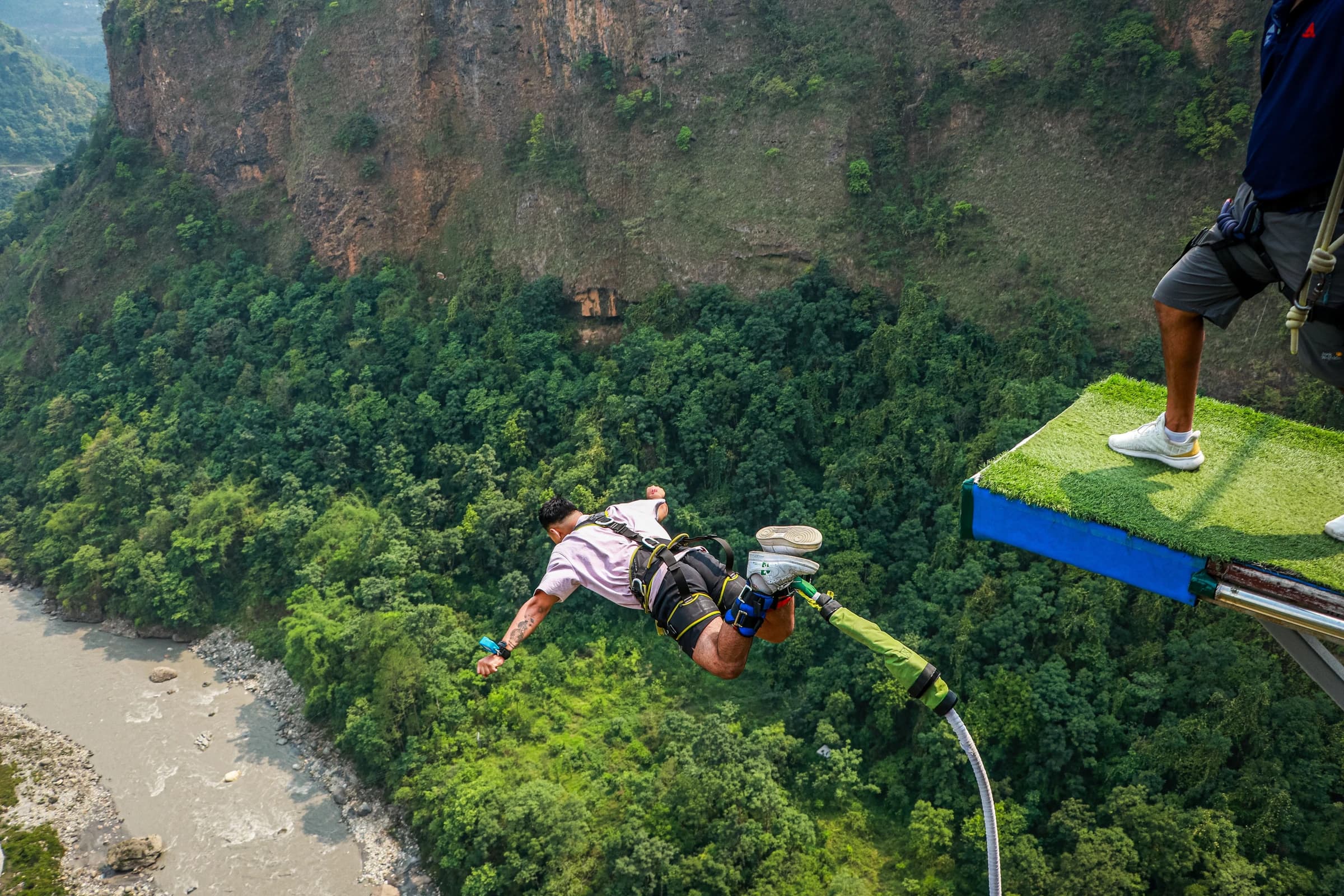
Bungee Jumping in Nepal
Bungee jumping is a controlled free-fall activity in which a participant leaps from an elevated platform secured by an engineered elastic cord, experiencing 2–4 seconds of weightlessness before a safe, decelerated rebound.
In Nepal, this activity is defined by one distinguishing factor: jumps are conducted over natural Himalayan terrain—glacial gorges, sacred rivers, and mountain canyons—rather than artificial structures. All operations adhere to international safety standards (UIAA / New Zealand protocols), with daily equipment inspections, redundant rigging systems, and certified jump masters overseeing every descent.
Eligibility: Age 16–60 | Weight 40–100 kg | Good general health. Individuals with cardiac conditions, hypertension, pregnancy, or recent injuries should obtain medical clearance prior to participation.
I. Bungee Jumping Locations in Nepal — 4 Premier Sites
No. | Site | Location | Jump Type | Key Differentiator |
|---|
1 | The Last Resort | Bhote Koshi Gorge, Sindhupalchok (~3 hrs from Kathmandu) | Bridge—~160 m | Nepal's original and most iconic jump, one of the world's deepest gorge jumps |
2 | Kushma Bungee | Kaligandaki Gorge, Parbat (~3 hrs from Pokhara) | Suspension bridge—228 m | Nepal's highest and one of the world's tallest bungee jumps |
3 | HighGround Adventure | Hemja, Pokhara | Tower—70 m | Nepal's only tower bungee; Annapurna range backdrop; combinable with zipline |
4 | Kathmandu Tower Bungee | Kathmandu Valley | Tower | Most accessible option; a genuine free-fall within the capital |
II. Nepal's Competitive Advantage
Authentic natural settings—free-fall into wild gorges and glacial rivers, unmatched by reservoir or stadium jumps elsewhere.
Record-class altitude—the 228 m Kushma jump ranks among the tallest commercial bungee jumps globally.
International safety governance—Nepal Tourism Board oversight with UIAA/NZ-standard protocols and per-jump equipment inspection.
Exceptional value—jump packages typically range from USD 68 to 110, substantially below comparable experiences in New Zealand, Switzerland, or Dubai.
Integrated adventure itineraries—bungee jumping combines seamlessly with trekking, paragliding, rafting, and Everest-region expeditions.
III. Optimal Seasonality
Season | Months | Assessment |
|---|
Autumn | Sep–Nov | Prime season—clear skies, stable weather, optimal visibility |
Spring | Mar–May | Excellent—mild climate, blooming landscapes |
Winter | Dec–Feb | Operational—clear mountain views; dress for gorge winds |
Monsoon | Jun–Aug | Conditional—rain and river levels may cause cancellations. |
Recommendation: Early-morning autumn slots offer the calmest wind conditions and the best lighting for professional photo/video documentation.
IV. Pre-Jump Guidelines
Advance booking is strongly advised, particularly during autumn peak season.
Present a valid passport or government ID; a signed liability waiver is mandatory.
Wear secure closed footwear and fitted clothing; remove all jewelry and loose items.
Consume a light meal 1–2 hours prior to the jump.
Follow jump-master instructions precisely regarding platform posture and free-fall position.
Photo and HD video packages are recommended—professional documentation is available at all sites.
Factor in transport costs; operator shuttles are the most reliable access to Bhote Koshi.
Combo tickets (bungee + zipline/rafting) deliver the best overall value.
V. Conclusion
Bungee jumping in Nepal occupies a category of its own: world-class engineering set against the world's greatest mountain landscape, delivered at unmatched value. Whether selecting the legendary Bhote Koshi bridge, the record-height Kushma canyon, or the Annapurna-view tower in Pokhara, participants are assured a professionally managed, unforgettable free-fall experience.
For reservations, seasonal availability, and customized adventure packages, contact a licensed and insured Nepal operator.