The Annapurna Base Camp Trek takes you into the Annapurna Sanctuary, a high basin ringed by Himalayan peaks. Over nine days you walk from Pokhara through Gurung villages, bamboo and rhododendron forest, and the Modi Khola valley to Annapurna Base Camp at 4,130m.
The trek is in Nepal’s Annapurna region, north of Pokhara. We drive to Kimche and start walking from there, through Ghandruk and Chhomrong. Beyond Chhomrong the trail climbs through Sinuwa, Dovan and Himalaya to Deurali, Machhapuchhre Base Camp and then the Sanctuary itself. After Annapurna Base Camp you walk back down through Bamboo and Jhinu Danda and return to Pokhara.
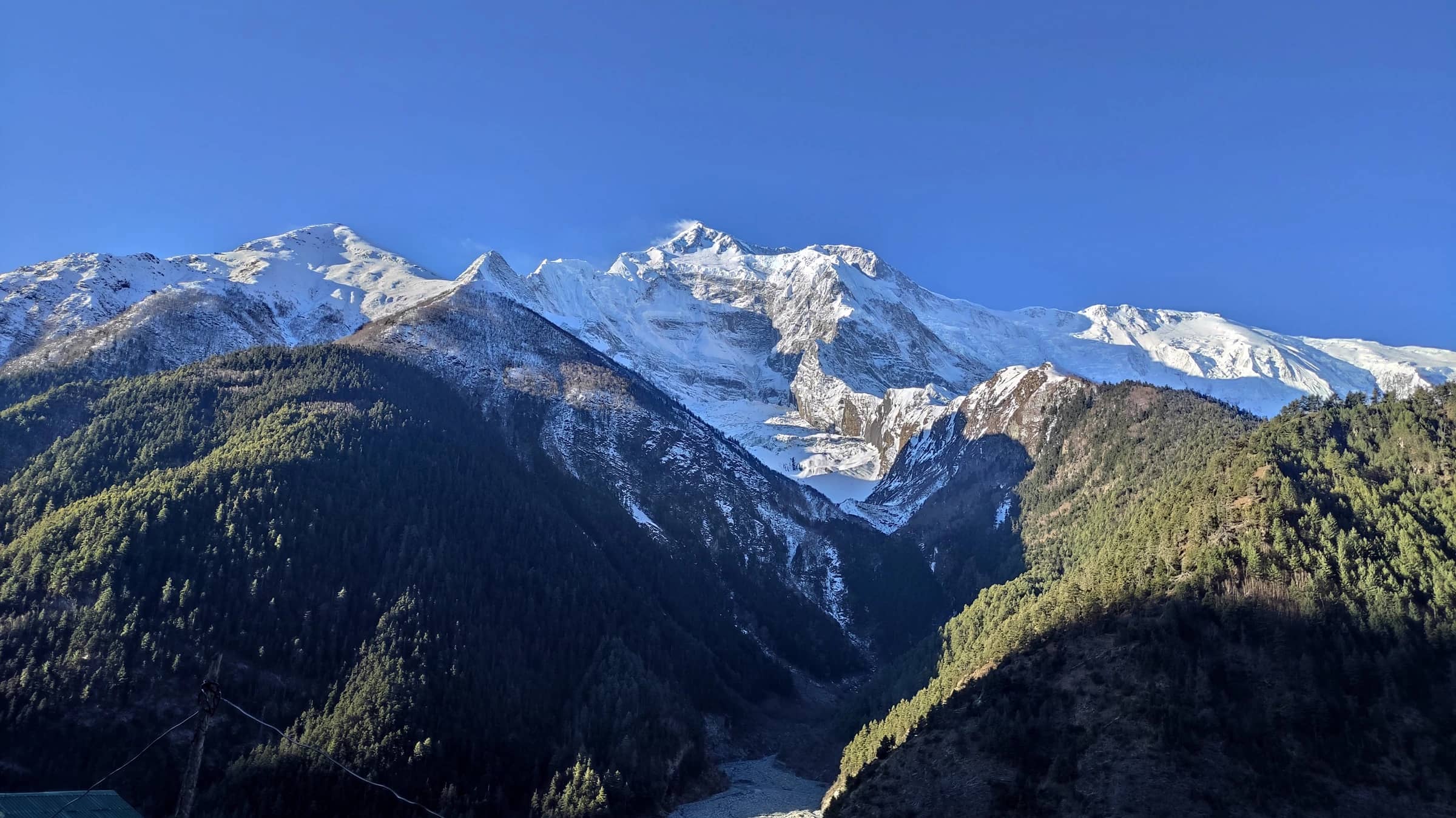
The scenery changes a lot along the way. The lower trail passes terraced hillsides and old mountain villages, then bamboo forest and rhododendron woodland. Higher up, the ground turns rocky and glacial, and the cliffs of the Modi Khola gorge close in with snow peaks on every side. At Annapurna Base Camp you stand in a bowl of mountains beneath Annapurna I and its neighbors.
Nine days is short for a Himalayan trek, so this route suits you if your time is limited. You spend time in Gurung villages, walk quiet forest trails, enter the Sanctuary and, if the sky is clear, watch the sun come up over the peaks from base camp. The walking is steady rather than easy, so some preparation and a comfortable pace go a long way.
Main Highlights
Reach Annapurna Base Camp at 4,130m, surrounded by Himalayan peaks
Panoramic views of Annapurna I, Annapurna South and Machhapuchhre
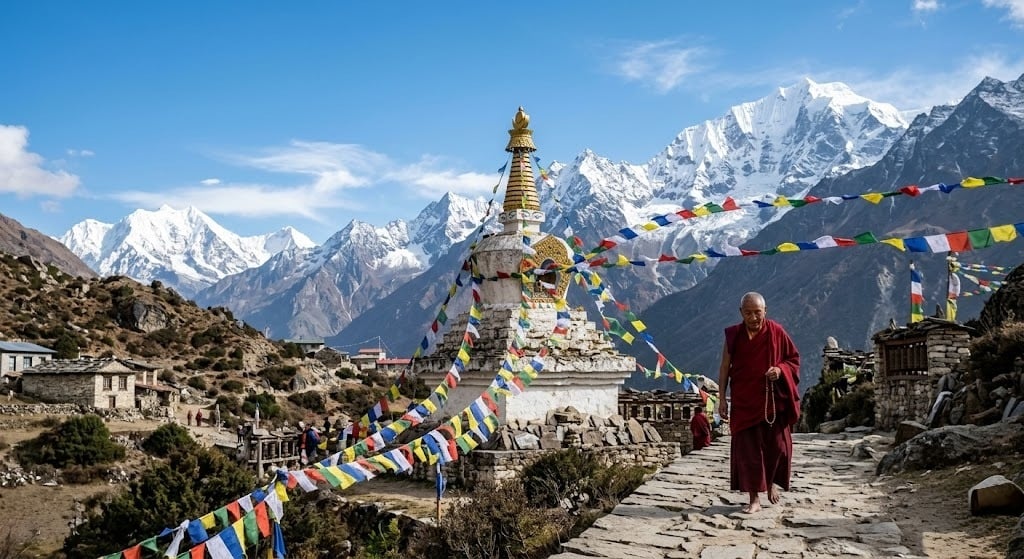
Ghandruk, a traditional Gurung village with its own culture and mountain views
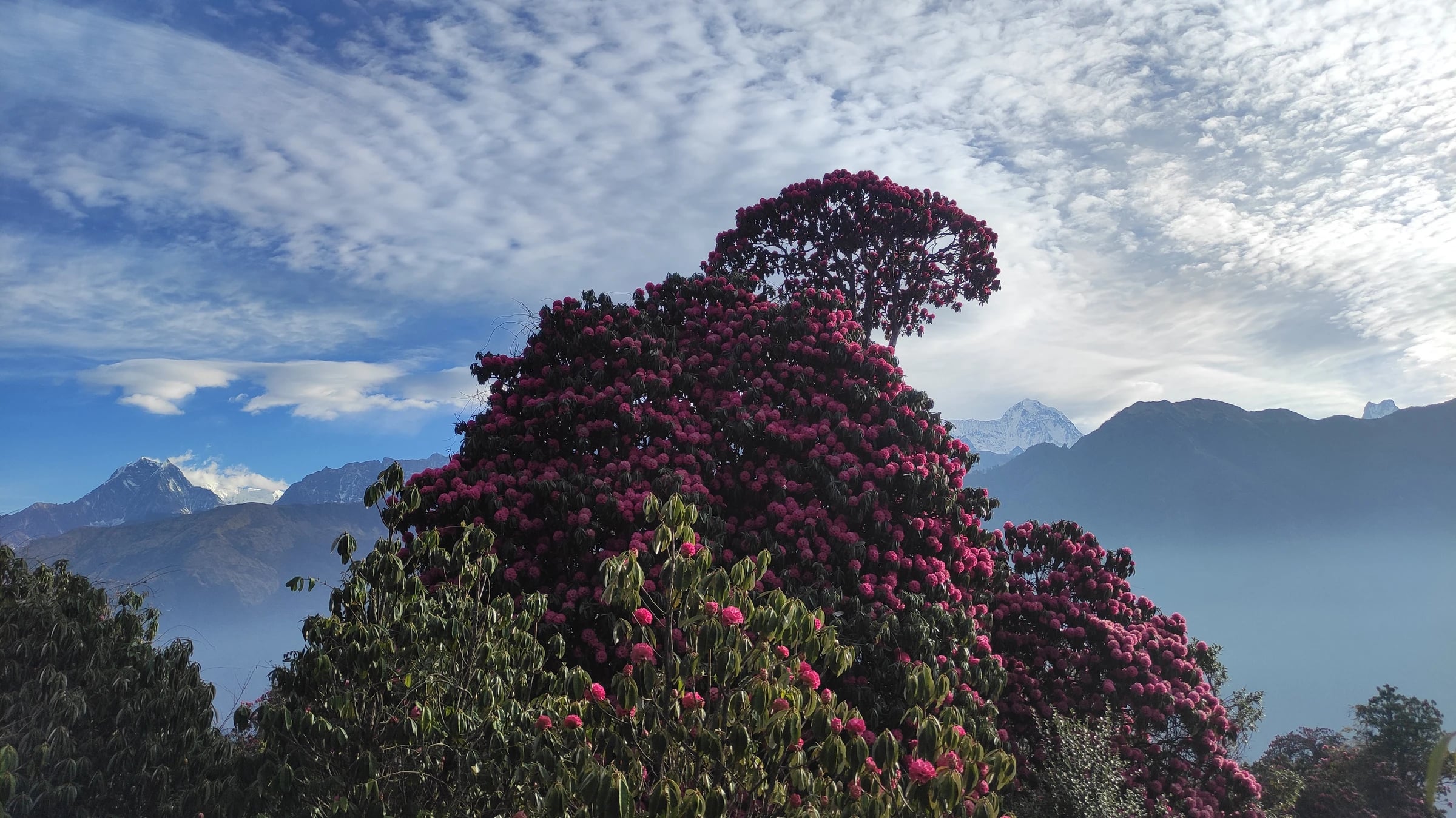
Bamboo forest and, in season, rhododendron woodland
The Modi Khola gorge on the way up to the Sanctuary
A stop at Machhapuchhre Base Camp before Annapurna Base Camp
Sunrise and sunset over the peaks
Terraced fields, mountain villages and local hospitality
Hot springs near Jhinu Danda, depending on access and conditions
Starts and ends in Pokhara
Trekking Route
Pokhara → Kimche → Ghandruk → Komrong → Chhomrong → Sinuwa → Dovan → Himalaya → Deurali → Machhapuchhre Base Camp → Annapurna Base Camp → Bamboo → Jhinu Danda → Siwai → Pokhara
We start with a drive from Pokhara to Kimche, then walk to Ghandruk, where the village opens out toward the mountains. From there the trail goes through Chhomrong and into the forested Modi Khola gorge, past small settlements and mountain lodges. As we gain height we pass Deurali and Machhapuchhre Base Camp, the last stretch on the way into the Annapurna Sanctuary. Annapurna Base Camp is where we turn around. We descend through Bamboo and Jhinu Danda, continue to Siwai, and drive back to Pokhara.
Sub Peaks and Mountain Views
Annapurna I – 8,091m: The highest peak in the Annapurna massif. Its snow-covered slopes fill the view at Annapurna Base Camp.
Annapurna South – 7,219m: Steep ridges and snow slopes. On a clear day it can be seen from parts of the route around Ghandruk and from other viewpoints.
Machhapuchhre – 6,993m: Also called Fishtail Mountain because of its twin summit, and one of the most recognizable peaks in Nepal. It dominates the upper Modi Khola valley and the view from Machhapuchhre Base Camp.
Hiunchuli – 6,441m: Stands close to Annapurna South and is part of the panorama around the Sanctuary. Its ridgelines are steep and sharp.
Gangapurna – 7,455m: Rises above the Manang Valley on the far side of the massif. It is not a main viewpoint on the standard Annapurna Base Camp route.
Annapurna III – 7,555m: Known for its steep faces and rugged outline. Whether you see it from the trail depends on where you are and the weather.
Trek Facts
The trail enters the Annapurna Sanctuary, a high basin surrounded by Himalayan peaks.
You climb from the lakeside city of Pokhara to 4,130m in a few days of walking.
The lower trail runs through subtropical vegetation, bamboo and rhododendron forest before the terrain turns alpine.
Ghandruk is a Gurung village known for its traditional architecture and cultural history.
On a clear morning at Annapurna Base Camp, the light shifts across the surrounding peaks at sunrise.
The trail follows the Modi Khola between steep forested slopes and rocky cliffs.
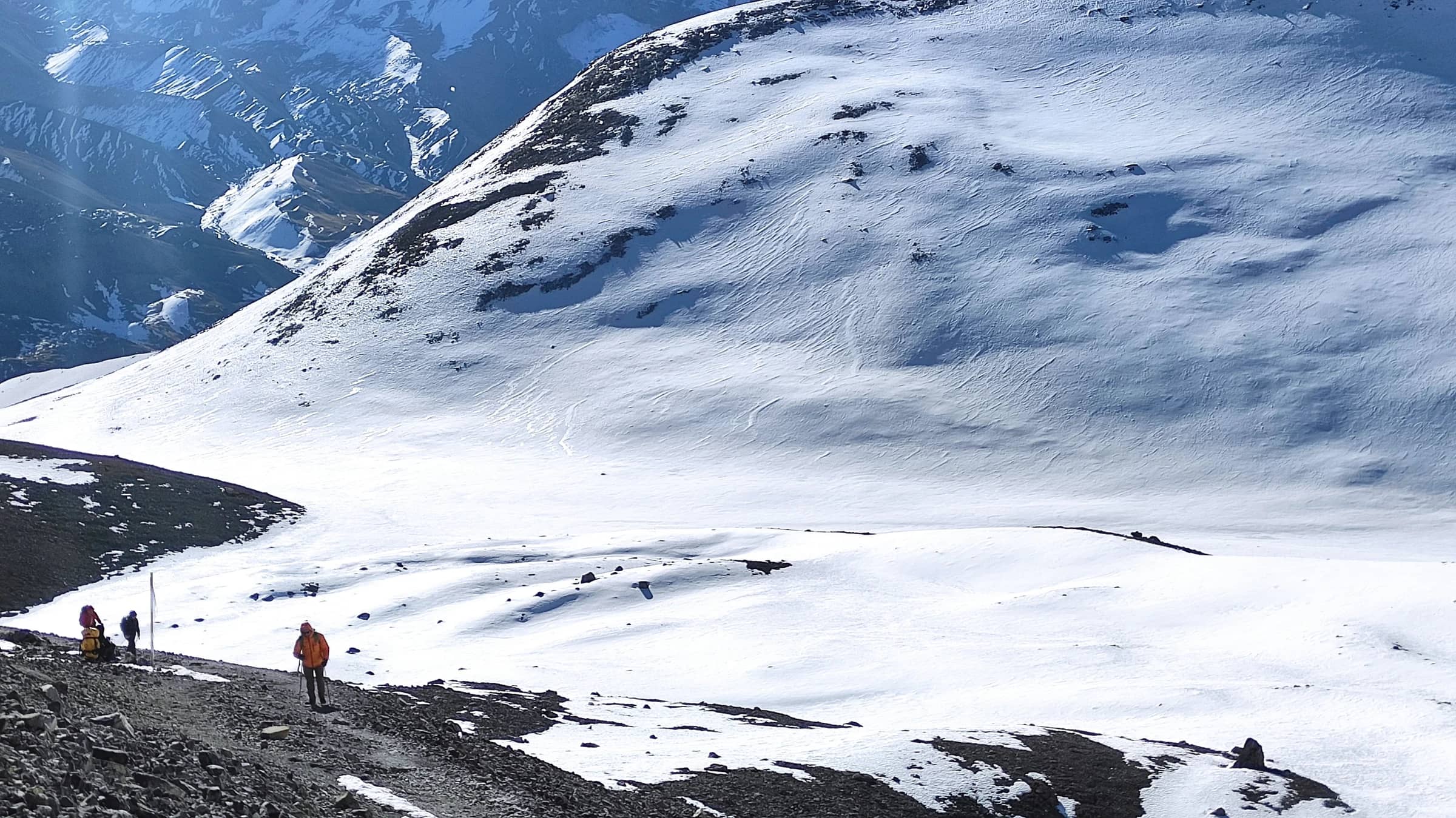
The route is well established, but it is still hard work. Expect repeated climbs and descents, long stretches of stone steps, and altitude.
Jhinu Danda has hot springs by the river, when the facilities are open.
Why Trek to Annapurna Base Camp?
This trek suits people who want the Himalayas without a very long expedition. In nine days you pass through forest, villages and the Annapurna Sanctuary, and finish beneath the peaks themselves. You sleep in teahouses, spend time in Ghandruk’s Gurung community, and walk under snow-covered mountains for most of the way up. It combines nature, culture and a fair amount of hard walking, which is why so many visitors choose it.
Best Season to Trek
Spring – March to May
One of the two best seasons. The weather is usually good for walking, the days are long, and rhododendrons bloom at lower and middle elevations. Cloud and sudden weather changes still happen.
Autumn – September to November
Clear mountain views and comfortable daytime temperatures are typical. The landscape is fresh after the monsoon, and trekkers come from all over the world, so the trails are busy. Nights get colder at higher elevations as the season goes on.
Winter – December to February
Possible with proper preparation, but it gets very cold around Machhapuchhre Base Camp and Annapurna Base Camp. Snow can affect the trail, so check local advice and the forecast before you go.
Monsoon – June to August
Expect rain, cloud, slippery trails and possible landslides at lower elevations. Mountain views are often blocked, and conditions can change quickly.
Recommended seasons: March–May and September–November.