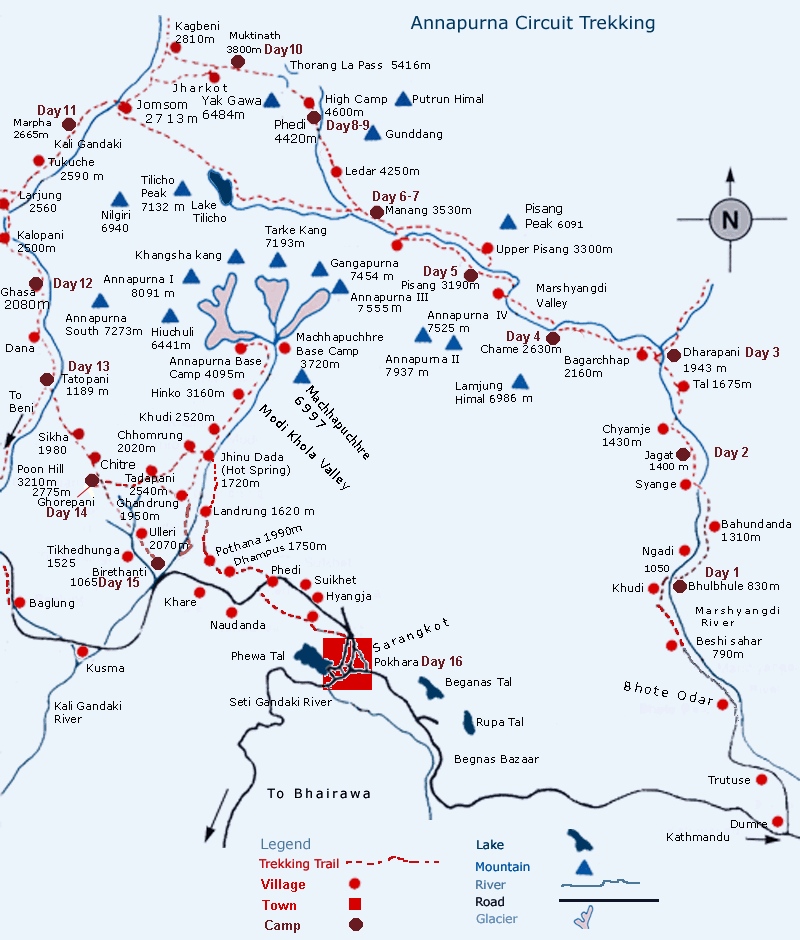
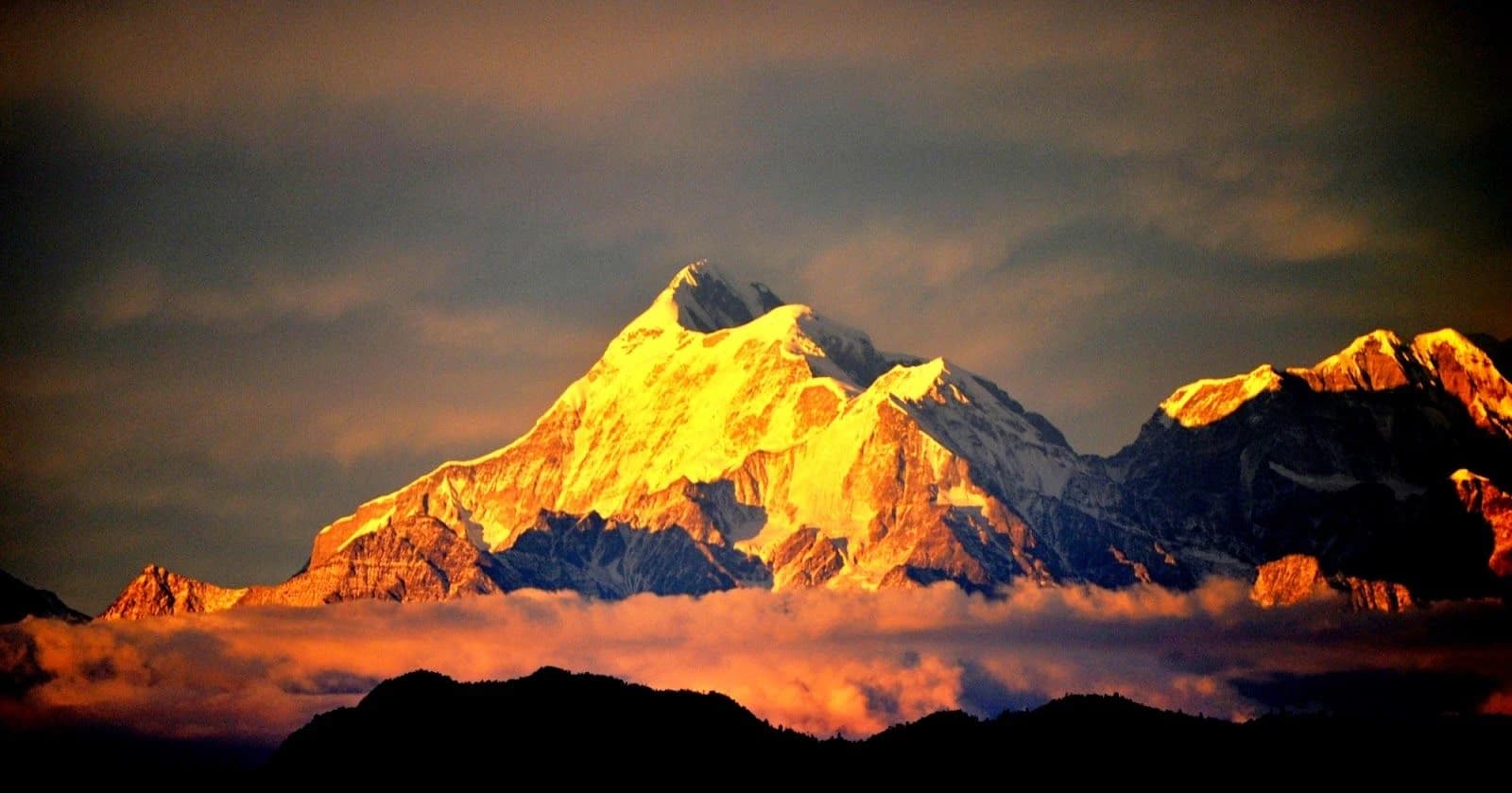
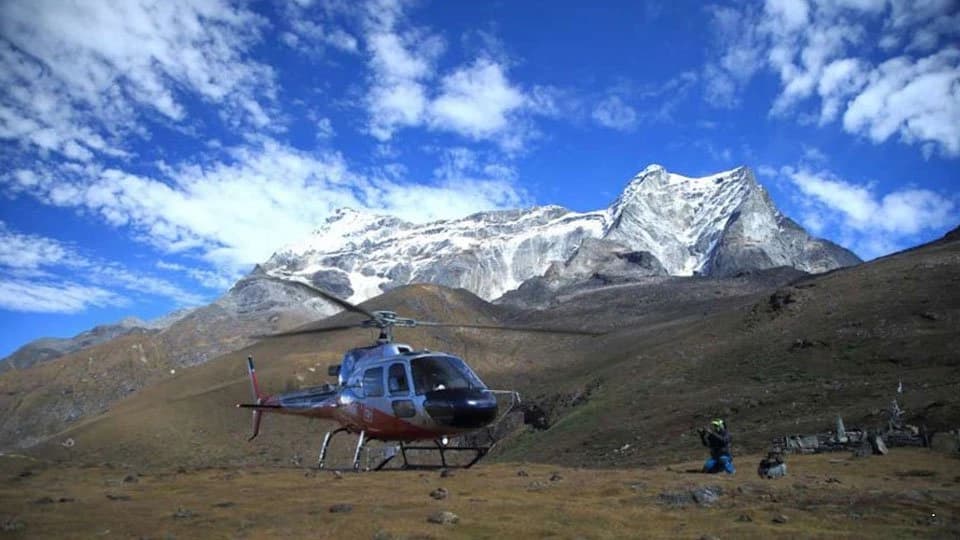
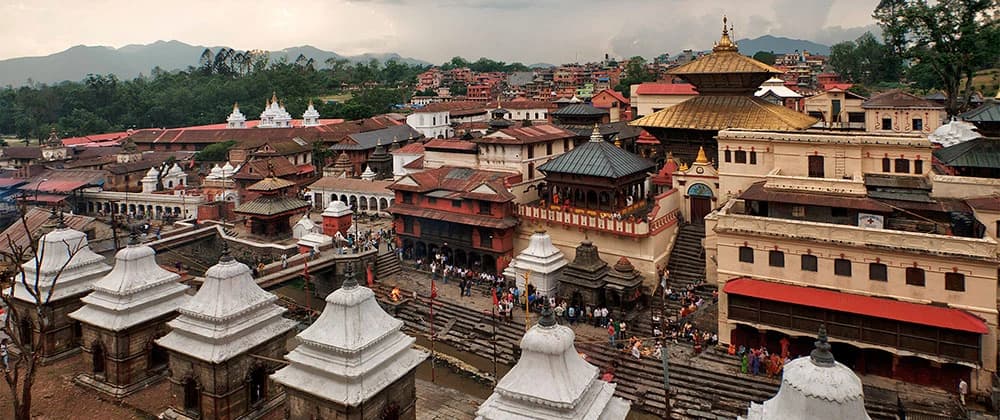
The Annapurna Circuit is already one of the world's great treks. But there is a hidden gorge that branches north from Manang — where a lake sits at 4,919 meters, higher than any other lake on Earth. Its waters are an impossible turquoise, fed by glacial melt and surrounded by unnamed peaks.
This 18-day itinerary combines the full Annapurna Circuit with a 3-day detour to Tilicho Lake. You will cross Thorong La Pass (5,416m), stand beside the world's highest lake, and walk through six climate zones, six ethnic regions, and six centuries of Himalayan history.
This is not a trek. This is the ultimate. Trip Highlights — The Signature Moments
Highlight | Elevation | Why It Matters |
|---|---|---|
Tilicho Lake | 4,919m | The world's highest lake. Turquoise water surrounded by snow and ice, accessible only by a rough, high-altitude trail. |
Thorong La Pass | 5,416 m | One of the world's highest trekking passes. The culmination of the Annapurna Circuit. |
Tilicho Base Camp | 4,150 m | A remote settlement at the foot of the lake, where the only sound is wind and cracking glaciers. |
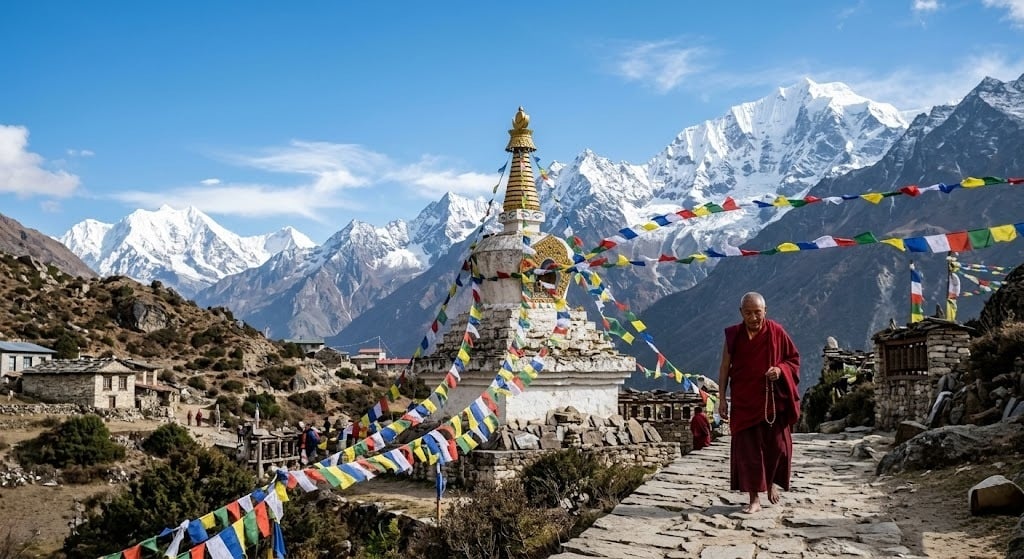
Manang Village | 3,540m | The cultural heart of the circuit—Tibetan-Buddhist villages, ancient monasteries, and yak cheese. |
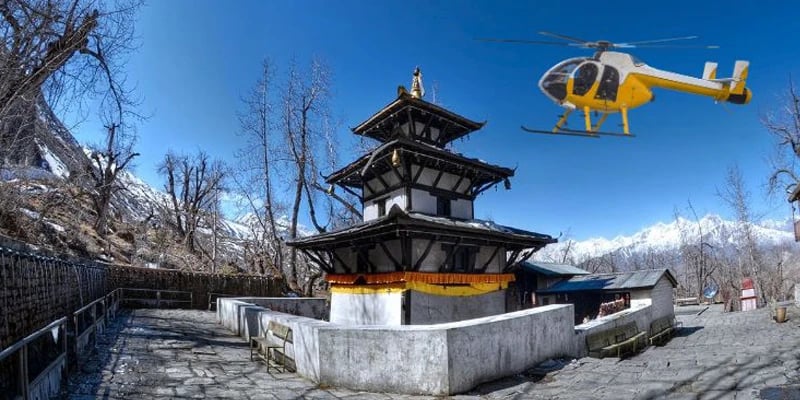
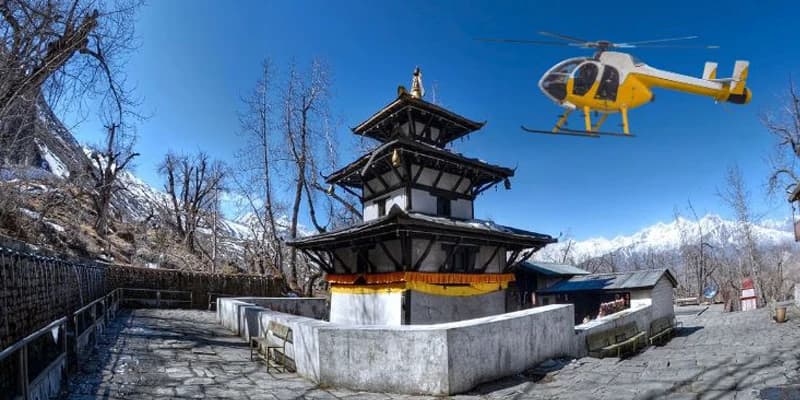
Muktinath Temple | 3,800m | Sacred to Hindus and Buddhists. The eternal flame and 108 waterspouts. |
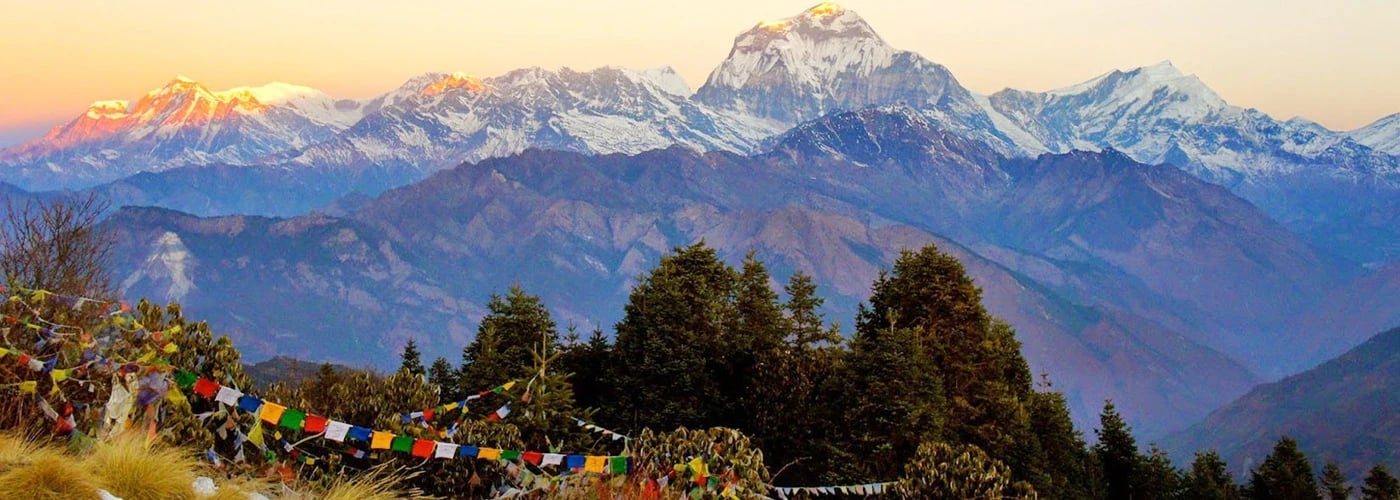
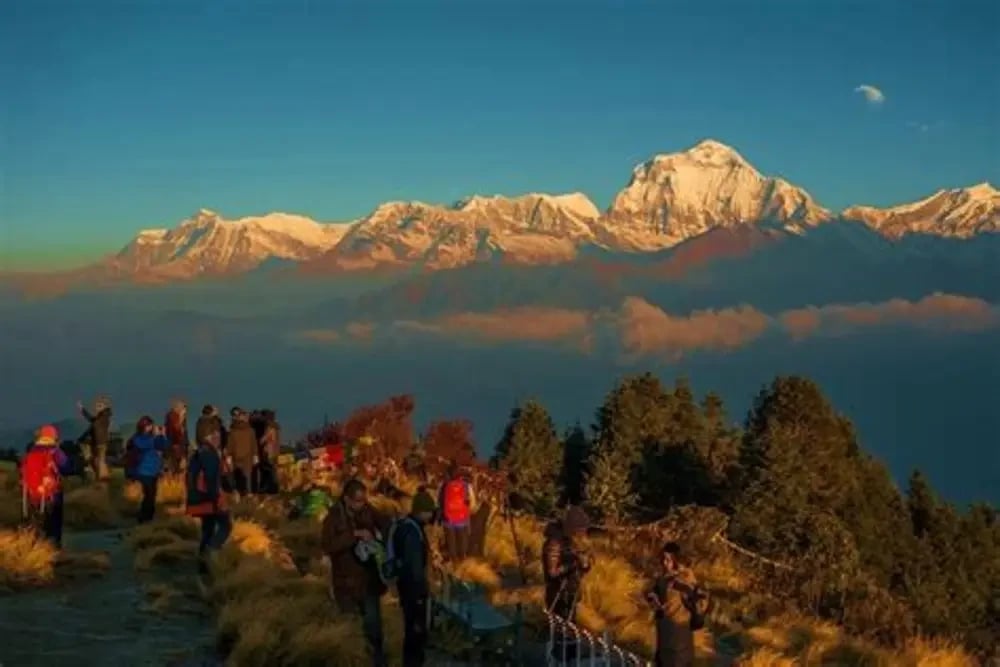
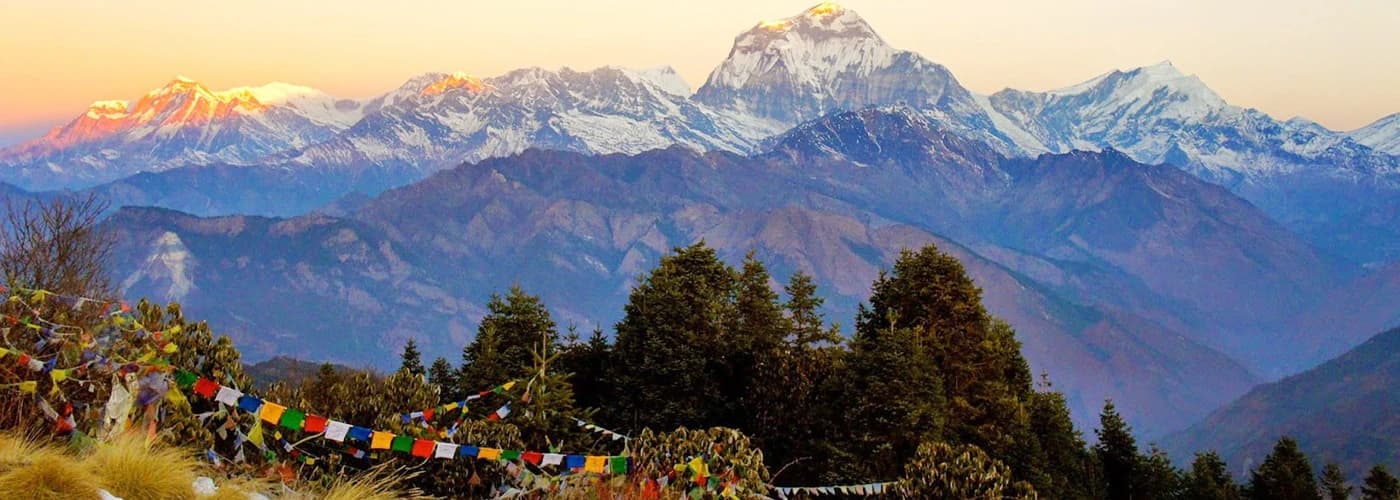
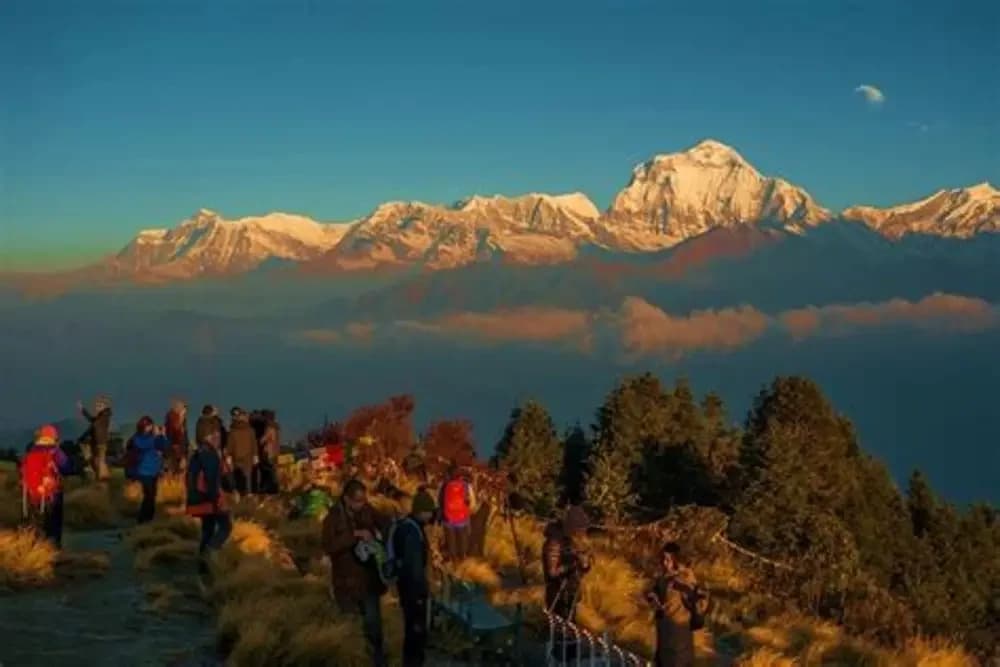
Poon Hill Sunrise | 3,210m | The grand finale—the most photographed sunrise in Nepal. |
Best Time to Trek
Season | Months | Conditions |
|---|---|---|
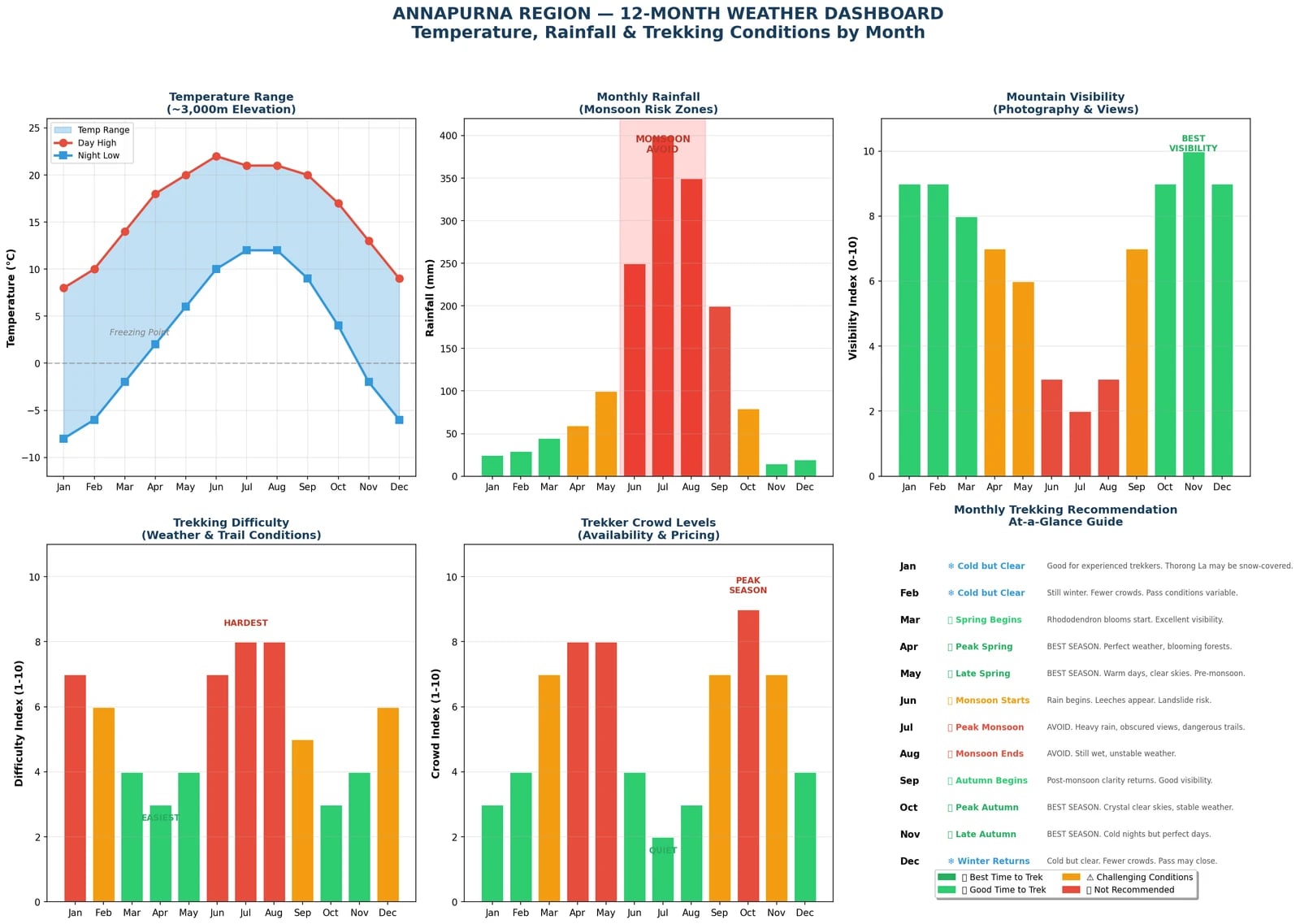
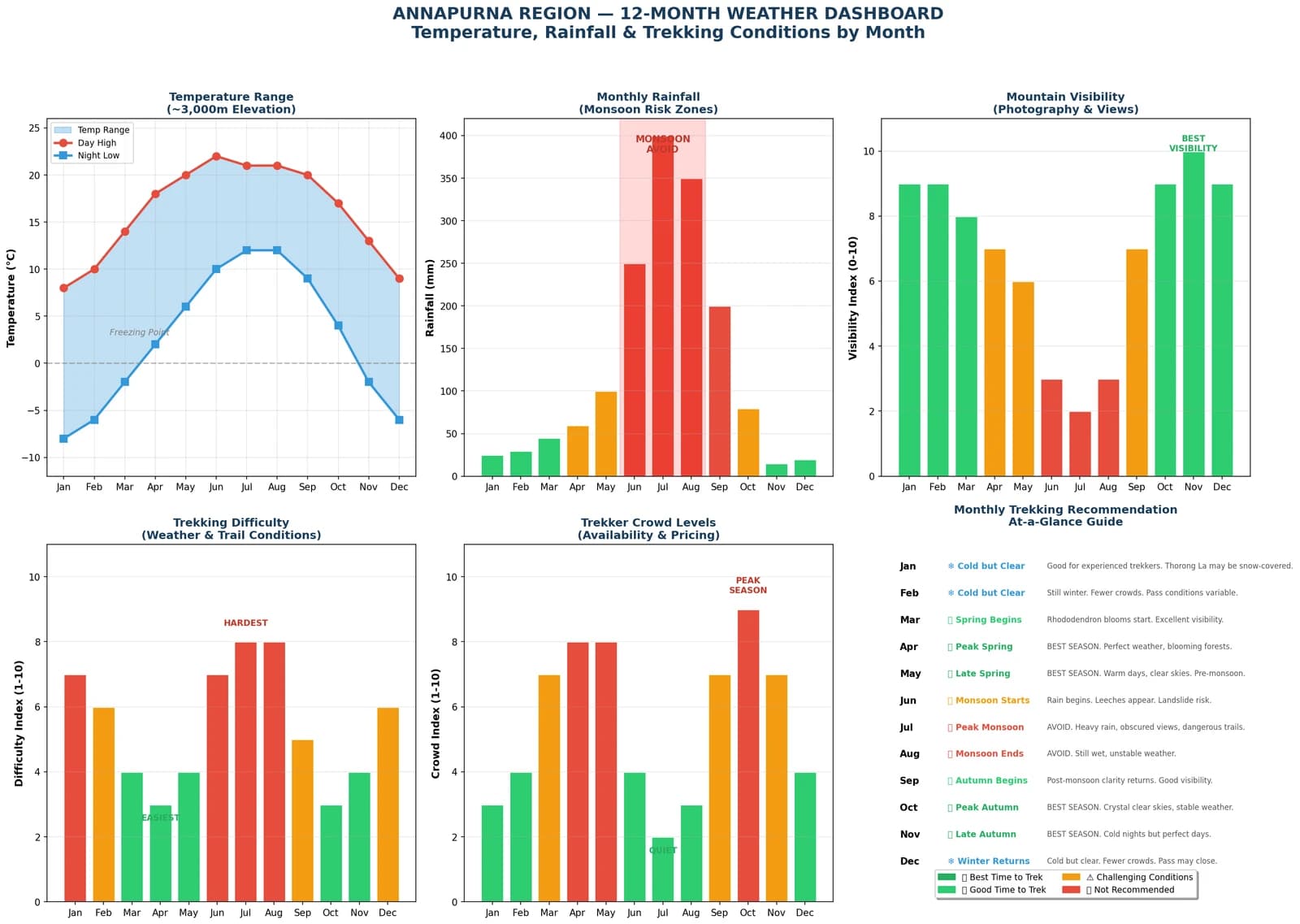
Spring | March–May | Clear skies, blooming rhododendrons, stable weather |
Autumn | September–November | Best visibility, dry trails, ideal temperatures |
Winter | December–February | Possible but Tilicho Lake may be inaccessible due to snow |
Monsoon | June–August | Landslide risks, leeches, poor visibility—not recommended |
Altitude & Acclimatization
Two acclimatization days in Manang (Days 5 and 6) — do not skip them
The jump from Manang (3,540m) to Shree Kharka (4,050m) is significant—walk slowly
Sleep at Thorong Phedi (4,540m) if unsure about altitude; sleep at High Camp (4,880m) for a shorter summit day
Hydrate 3–4 liters daily above 3,000m
Safety Considerations
Risk | Mitigation |
|---|---|
Altitude Sickness | Two rest days in Manang, gradual ascent, descend immediately if symptoms worsen |
Tilicho Lake Avalanche Risk | Start early (5:00 AM), carry microspikes in late season, turn back if weather deteriorates |
Thorong La Weather | Cross early in the morning (before 10:00 AM); avoid afternoon winds and storms |
Cold | Fill water bottles with hot water before bed, bring -15°C sleeping bag, layer system |
Key Notes:
Best Seasons: March–May (spring) and September–November (autumn). Winter (Dec–Feb) is possible, but Tilicho Lake may be inaccessible due to snow. Monsoon (Jun–Aug) brings landslide risks.
Altitude Sickness: The itinerary builds in two acclimatization days in Manang. Do not skip them. The jump from Manang (3,540 m) to Shree Kharka (4,050 m) is significant—walk slowly.
Tilicho Lake Risk: The trail from Base Camp to the lake crosses avalanche-prone slopes. Start early, carry microspikes in late season, and turn back if weather deteriorates.
Thorong La: The pass crossing is the crux of the trek. Sleep low (Phedi) if you’re unsure about altitude; sleep high (High Camp) if you want a shorter summit day.
This is a serious, rewarding trek—one of the finest in the Himalayas. The Tilicho detour adds 3 days of raw, remote beauty that few trekkers experience. Safe travels.