What is the Annapurna Region?
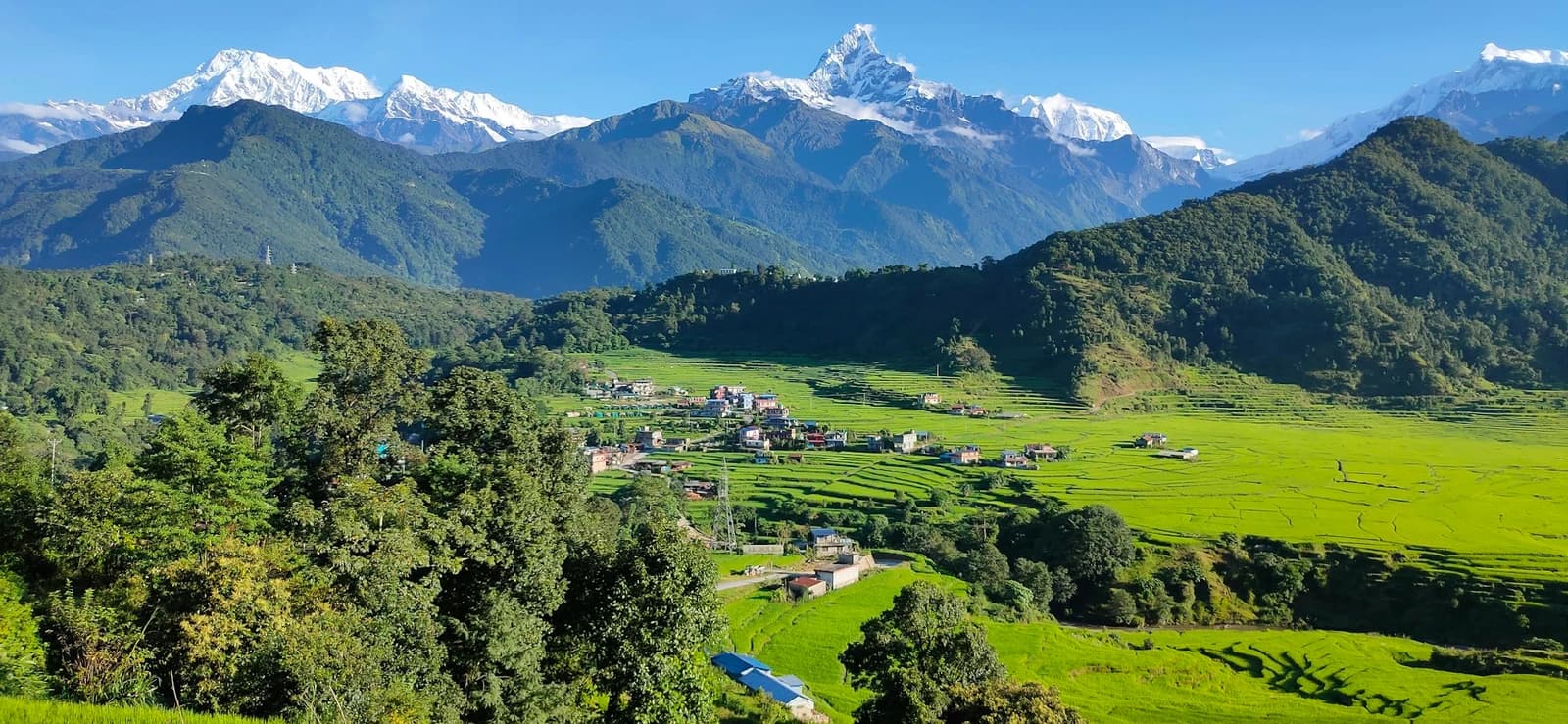
The Annapurna Region is a diverse trekking destination in north-central Nepal, protected within the Annapurna Conservation Area (ACAP), the country’s largest protected area, established in 1986. It is dominated by the Annapurna massif, including Annapurna I (8,091 m), the tenth-highest mountain in the world, along with Dhaulagiri, Machapuchare (Fishtail), Annapurna South, and Gangapurna. The region is known for its dramatic changes in landscape, from subtropical forests and terraced farmland to high alpine deserts and glacial valleys, all within a single trek.
Who lives here?
The trails pass through villages of the Gurung, Magar, Thakali, and Manangi communities. Trekkers experience Hindu and Buddhist traditions, local cuisine such as Thakali dal bhat, and welcoming teahouses run by local families.
How do you get there?
Most treks start from Pokhara, Nepal’s lakeside adventure hub, about 25 minutes by flight or 6-8 hours by road from Kathmandu. From Pokhara, short drives lead to trailheads such as Nayapul, Besisahar, Phedi, and Siwai. Unlike the Everest Region, no flight to a mountain airstrip is needed to begin most Annapurna treks.
Popular Annapurna Region treks
Annapurna Circuit Trek: 10-15 days (depending on road use), crossing Thorong La Pass (5,416 m), one of the world’s highest trekking passes, and passing through the Kali Gandaki Gorge to sacred Muktinath
Annapurna Base Camp (ABC) Trek: 7-12 days, reaching 4,130 m inside the Annapurna Sanctuary, surrounded by towering peaks
Ghorepani Poon Hill Trek: 4-6 days, a short, scenic route with sunrise views from Poon Hill (3,210 m) and rhododendron forests
Mardi Himal Trek: 5-8 days, a quieter ridge trek with close views of Machapuchare and Annapurna South
Tilicho Lake Trek: 12-16 days, an add-on to the Circuit reaching Tilicho Lake (4,919 m), one of the highest lakes in the world
Khopra Danda and Annapurna Panorama treks: community-run, off-the-beaten-path options
Best time to trek
Autumn (September-November) offers clear skies, stable weather, and the best mountain views. Spring (March-May) brings blooming rhododendrons and warm days. Winter is suitable for lower treks such as Poon Hill, while the monsoon (June-August) is wet in the south but a good time for the drier, rain-shadow areas of Upper Mustang and Manang.
Permits required
Trekkers need an Annapurna Conservation Area Permit (ACAP) and a local municipality entry permit, depending on the route. Permits are issued in Kathmandu or Pokhara. Requirements and fees change, so confirm current rules with a licensed operator before departure.
Altitude and safety
The main risk on high routes such as the Circuit and Tilicho is Acute Mountain Sickness (AMS). Gradual ascent, rest days in Manang, hydration, and awareness of symptoms are essential. Lower treks such as Poon Hill carry minimal altitude risk, making them suitable for beginners and families.
Annapurna vs. Everest: How do they compare?
Annapurna offers more variety in scenery and culture, easier access from Pokhara, lower costs, and generally fewer crowds on alternative routes. Everest is known for its iconic base camp and Sherpa heritage. Both are rewarding, so the right choice depends on fitness, time, and interests.
Why trek in the Annapurna Region?
It combines diverse ecosystems, rich cultural traditions, and well-developed teahouse infrastructure and routes for every level, from a 4-day introduction to a three-week classic circuit, making it one of the most complete trekking regions in the world.
