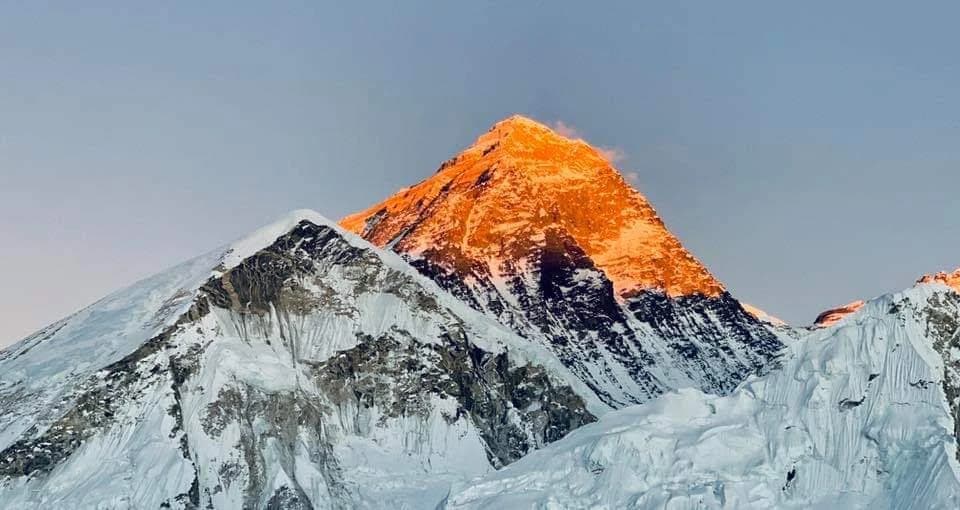
The Everest Region, also called Khumbu, is a high-altitude area in northeastern Nepal within Sagarmatha National Park, a UNESCO World Heritage Site. It is home to Mount Everest (8,848.86 m), the highest mountain on Earth, along with Lhotse, Makalu, Cho Oyu, and Ama Dablam. The region is the heartland of the Sherpa people, known for their mountaineering heritage, Buddhist culture, and warm hospitality.
How do you get there?
Most journeys begin with a scenic 30-minute flight from Kathmandu (or Ramechhap in peak season) to Lukla (2,860 m). From there, trekkers follow well-marked trails through Sherpa villages, rhododendron forests, suspension bridges, and glacial valleys. Overland routes via Jiri or Salleri are available for those who prefer a longer, gradual approach.
Popular Everest Region treks
Everest Base Camp Trek: 12-14 days, reaching 5,364 m and Kala Patthar (5,545 m) for sunrise views of Everest
Gokyo Lakes Trek: 12-14 days, turquoise high-altitude lakes, and Gokyo Ri (5,357 m)
Everest Three Passes Trek: 18-21 days, a demanding loop crossing Kongma La, Cho La, and Renjo La
Everest View Trek: 5-7 days, a shorter option for Namche Bazaar, Tengboche Monastery, and panoramic views
Island Peak and Mera Peak climbs: guided expeditions for experienced adventurers
Best time to visit
The best seasons are spring (March-May) for blooming rhododendrons and stable weather, and autumn (September-November) for crisp skies and clear mountain views. Winter is cold but quiet, while the monsoon (June-August) brings rain and limited visibility.
Everest Region Permits: What You Need and Why
Which permits are required for the Everest Region?
Trekkers in the Everest Region (Khumbu) need two main permits:
Permit | Issued by | Where to get it | Approx. fee (foreign nationals) |
|---|---|---|---|
Sagarmatha National Park Entry Permit | Department of National Parks and Wildlife Conservation | Nepal Tourism Board office in Kathmandu (Bhrikutimandap) or the Monjo checkpoint | NPR 3,000 + 13% VAT |
Khumbu Pasang Lhamu Rural Municipality Entry Permit | Local municipality | Lukla, or checkpoints along the trail | NPR 2,000 per person (higher after the first four weeks) |
Fees are indicative and may change. Always confirm current rates with a licensed Nepali trekking company before departure.
Do you need a TIMS card for Everest?
In the Khumbu region, the local municipality permit has largely replaced the TIMS card requirement. Rules differ by region and change over time, so ask your operator to confirm what applies to your itinerary.
Additional permits for special routes
Peak climbing (Island Peak, Lobuche East, Mera Peak): a Nepal Mountaineering Association (NMA) climbing permit is required on top of the standard trekking permits.
Everest expeditions: a separate expedition permit is issued by the Department of Tourism, with its own fee structure and regulations.
Documents you need to apply
Valid passport (with at least 6 months of validity)
Passport-sized photos
Nepal visa copy
Travel insurance details, ideally covering helicopter evacuation up to 6,000 m
Trekking itinerary and emergency contact
Why do you need permits to trek in the Everest Region?
Protecting a UNESCO World Heritage Site. Sagarmatha National Park has been protected since 1976 and holds fragile alpine ecosystems, glaciers, and rare wildlife such as the snow leopard, Himalayan tahr, and musk deer. Permit fees directly fund conservation, trail maintenance, and wildlife protection.
Supporting local Sherpa communities. Revenue from the municipality permit stays in the Khumbu, funding schools, health posts, water systems, waste management, and community infrastructure.
Safety and tracking. Permits create a record of who is on the trail and where. If a trekker goes missing or an emergency, weather event, or landslide occurs, authorities and rescue teams can locate and assist trekkers faster.
Managing visitor numbers and environmental impact. Controlled access reduces overcrowding, waste, and trail erosion, helping keep the region sustainable for future generations.
Legal compliance. Trekking without valid permits can result in fines, being turned back at checkpoints, or delays. Checkpoints at Monjo, Namche Bazaar, and other points along the route regularly check permits.
Practical permit tips
Book through a licensed, government-registered trekking agency, which can arrange permits for you and save time.
Carry both permits and multiple photocopies throughout the trek, since they are checked at several checkpoints.
Keep the permits in a waterproof pouch.
Factor permit costs into your trek budget, separate from flights, guides, and accommodation.
Ask your operator about current regulations on guides, as Nepal has announced and revised guide requirements for trekkers in recent years.
Quick FAQ
Do I need a permit for Everest Base Camp?
Yes. You need the Sagarmatha National Park permit and the Khumbu Pasang Lhamu Rural Municipality permit.Where can I buy the Everest permits?
The national park permit in Kathmandu or Monjo, and the local municipality permit in Lukla or along the trail.How much do Everest trek permits cost?
Roughly NPR 5,000 combined for foreign trekkers, plus taxes, subject to change.Are permits included in package prices?
Most reputable operators include permits in their trek packages. Always confirm in the inclusions list. Altitude and safety
Acute Mountain Sickness (AMS) is the main risk. Proper acclimatization days at Namche Bazaar and Dingboche, steady hydration, a slow pace, and a licensed guide significantly improve safety and success rates.
Why trek in the Everest Region?
It combines world-class scenery, living Sherpa culture, ancient monasteries, and well-developed teahouse lodging, making it one of the most rewarding trekking destinations in the world for both first-timers and seasoned adventurers.