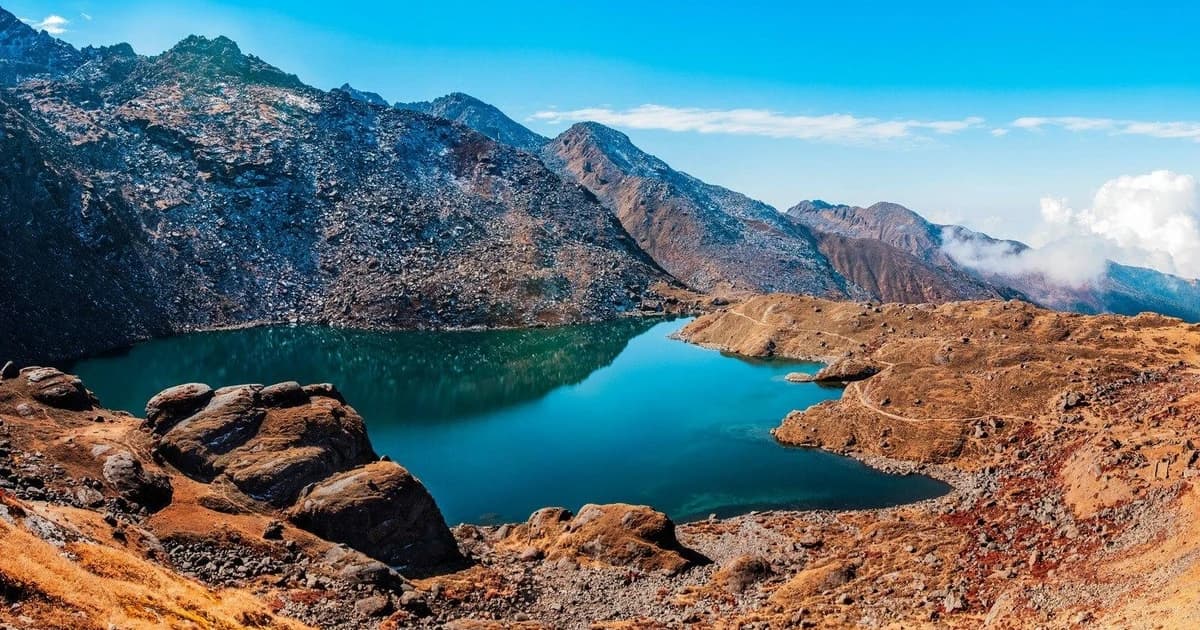
The Langtang Region is one of Nepal's most accessible Himalayan destinations, located just north of Kathmandu. Known for its stunning mountain scenery, rich Tamang heritage, pristine forests, and the protected landscapes of Langtang National Park, it offers an ideal blend of nature, culture, and adventure. From the popular Langtang Valley Trek to the sacred lakes of Gosaikunda and the panoramic viewpoints of Kyanjin Ri, the region provides unforgettable experiences for trekkers seeking authentic Himalayan beauty away from the crowds.
Tamang Culture — What to Know Before You Trek
The Langtang Valley is a Tamang-majority region. The Tamang are a Tibetan-Buddhist people with a distinct language, dress, and ceremonial tradition. The culture you encounter on this trek is not performed for visitors — it is the daily life of the families who live here. Understanding a few fundamentals matters.
At monasteries and chortens: Always walk clockwise around chortens, prayer wheels, and mani walls. Remove shoes before entering a gompa (monastery). Ask before photographing religious ceremonies, monks, or altar interiors. Small donations (NPR 50–200) to monasteries are appreciated.
At teahouses, your hosts are your hosts first, not service providers. Greet with "Namaste" (palms together, slight bow). "Danyabad" means "thank you." It costs nothing and matters to the people hearing it. Do not complain loudly about basic facilities—they represent real investment in a remote location.
With guides and porters: Porters carry weight that makes your experience possible. Treat them as equal members of the group, acknowledge their work, and pay the customary tip. They walk the same trail you do, often in lighter footwear and heavier loads, and most of them are from the same Tamang communities you are visiting.
Photography: Always ask before photographing people, particularly local women and older community members. A smile and a gesture towards your camera are universal and usually met with either a warm yes or a gentle no—both are valid answers.
Waste and environment: Carry out what you carry in. Langtang's remoteness means that trash arriving with trekkers stays in the valley unless specifically removed. Your guide can direct you to lodge bins used for rubbish-collection programs.
The Trail Environment — Wildlife and Natural Zones
Langtang National Park (1,710 km²) spans five ecological zones, rising from subtropical riverine forest at 1,000 m to glaciated alpine terrain above 6,000 m. This altitudinal range produces a biodiversity density that is, by any measure, exceptional.
Ecological Zones on the Route
Zone 1—Subtropical Forest (1,000–2,000 m): The lower Langtang River gorge from Syabrubesi passes through warm, humid forest dominated by sal, chirpine (Himalayan blue pine), and riverine oak. This is where langur monkeys are most reliably seen — often in troops of 20–40 animals crossing the trail or feeding in the lower canopy.
Zone 2 — Temperate Broadleaf Forest (2,000–3,000 m): The trail from Syabrubesi to Lama Hotel and beyond passes through the richest biodiversity zone on the route. Oak, maple, rhododendron, and dense bamboo undergrowth characterize this band. Red pandas—classified as Endangered by IUCN—inhabit the bamboo-rhododendron ecotone between approximately 2,200 m and 2,800 m and are most active at dusk and dawn. Your guide knows where to look, and patience rewards.
Zone 3 — Subalpine / Alpine Transition (3,000–3,800 m): From Ghoda Tabela to Kyanjin Gompa, the forest gives way to juniper scrub, alpine shrubs, and open meadow. Himalayan tahr—wild mountain goats recognizable by their shaggy coats and swept-back horns—inhabit the rocky slopes in this zone and are commonly seen above Langtang Village. Blue sheep (bharal) appear on the higher ridges.
Zone 4—High Alpine/Glacial Zone (3,800 m+): The Kyanjin Gompa valley floor and the approaches to Kyanjin Ri and Tserko Ri are high-altitude moraine, boulder field, and yak pasture. Wildlife sightings are rarer, but the Himalayan monal pheasant (Nepal's national bird, with iridescent multicolored plumage) is frequently seen here. The elusive snow leopard exists in this zone — sightings are rare and always unprompted, but the tracks are found by guides every season.
Key Wildlife
Species | Status | Best Chance |
|---|---|---|
Red Panda | Endangered | Bamboo zone, Syabrubesi to Lama Hotel, dusk/dawn |
Snow Leopard | Vulnerable | High alpine zone above 3,800 m; extremely rare |
Himalayan Tahr | Near Threatened | Rocky slopes, Ghoda Tabela to Kyanjin Gompa |
Blue Sheep (Bharal) | Least Concern | High ridges above 3,500 m |
Himalayan Musk Deer | Endangered | Subalpine forest; very shy |
Himalayan Black Bear | Vulnerable | Mid-elevation forest; rarely seen |
Langur Monkey | Least Concern | Lower forest; commonly seen in groups |
Himalayan Monal | Least Concern | Alpine meadow, Kyanjin Gompa area |
Crimson-Horned Pheasant | Endangered | Subalpine forest; early morning |
Himalayan Griffon Vulture | Near Threatened | Thermal soaring over the valley; daily |
The park's recorded wildlife inventory includes 46 mammal species, 345 bird species, 1,043 species of vascular plants (15 of which are endemic to the Langtang region), and 70 butterfly species.


