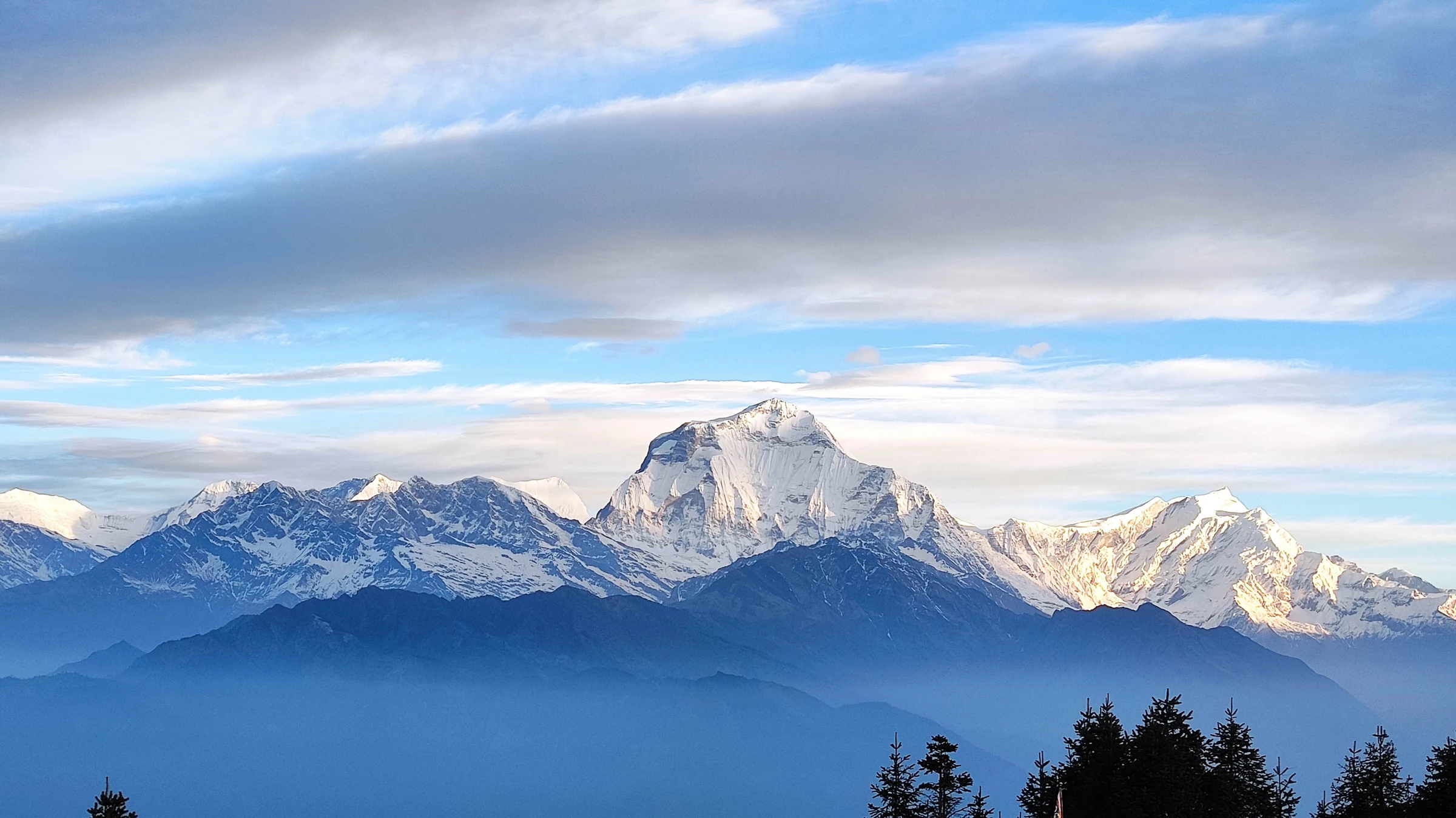
The Mardi Himal Trek is a short trek in Nepal’s Annapurna region, northeast of Pokhara. This 6-day version starts with a drive from Pokhara to Kande, then climbs through Pitam Deurali and Low Camp to High Camp. From there you hike up to the Mardi Himal viewpoint or, if conditions and your legs allow, on to Mardi Himal Base Camp. The return goes back down through Low Camp to Siding village, followed by a drive to Pokhara.
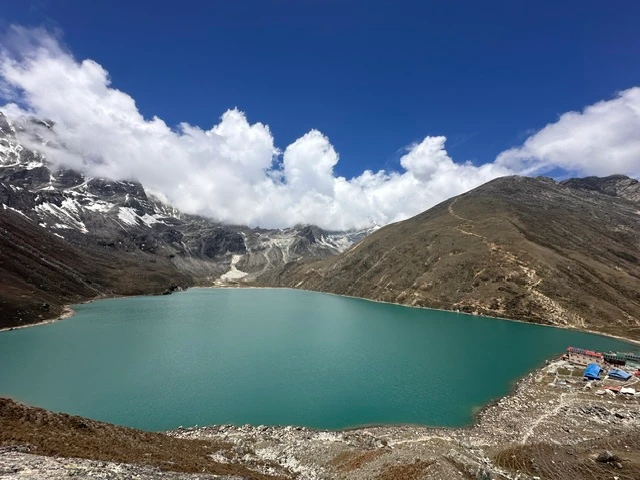
The scenery changes a lot over six days. You begin on terraced hills and farmland, then move into rhododendron and oak forest, with moss hanging off the branches. Higher up the trees thin out and the ridge opens into bare, rocky ground. From High Camp, Machhapuchhre (Fishtail) stands very close and very clear against the sky, with snow peaks all around it.
It suits people who want a proper Himalayan trek without a long stretch away from Pokhara. Other routes in the region take many days to reach high viewpoints. Mardi Himal gets you onto the ridge much faster, and the lodges along the way are simple and friendly. It also works well as a first trek in Nepal.
Main highlights
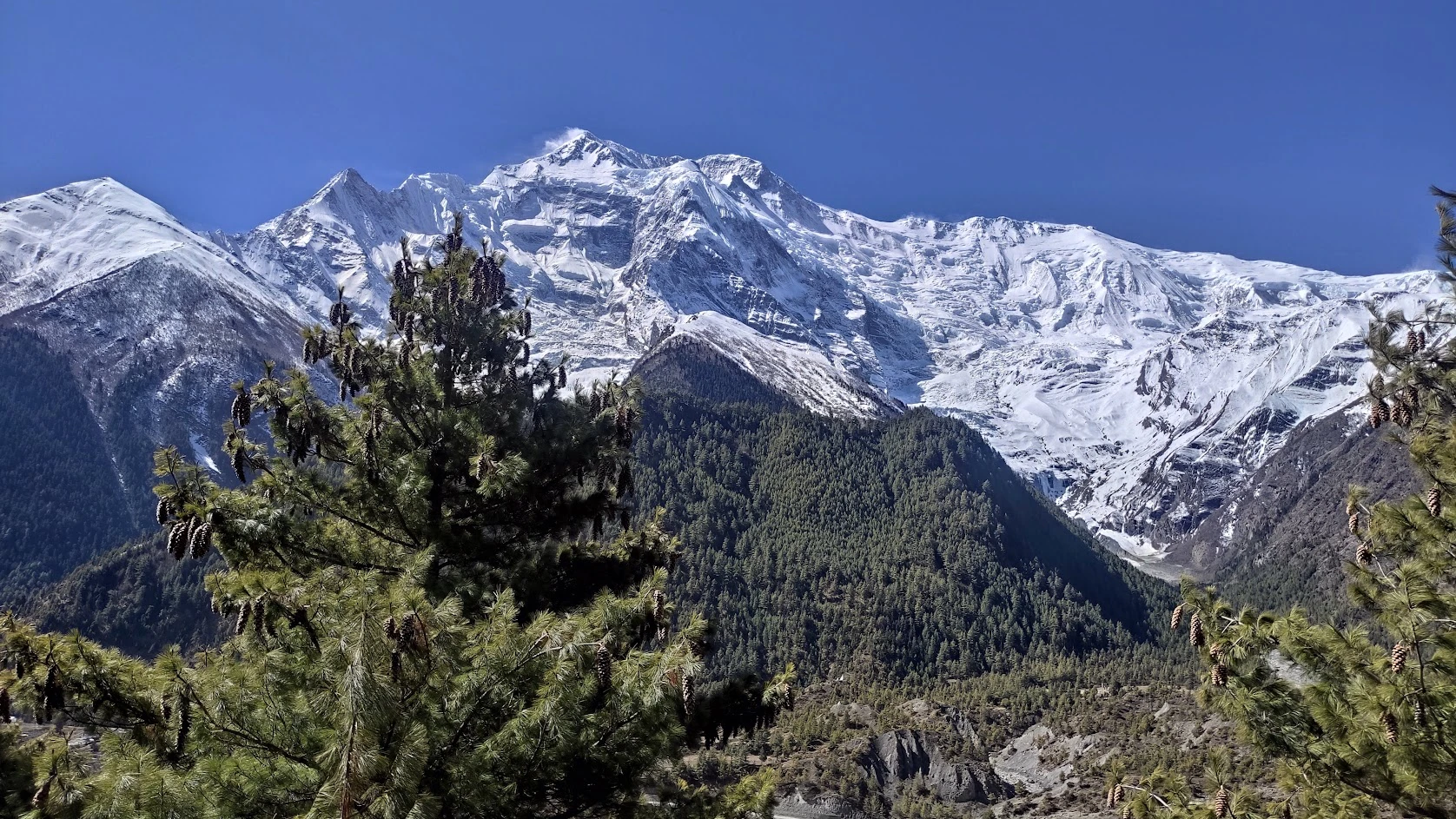
Close views of Machhapuchhre (Fishtail) and the Annapurna range.
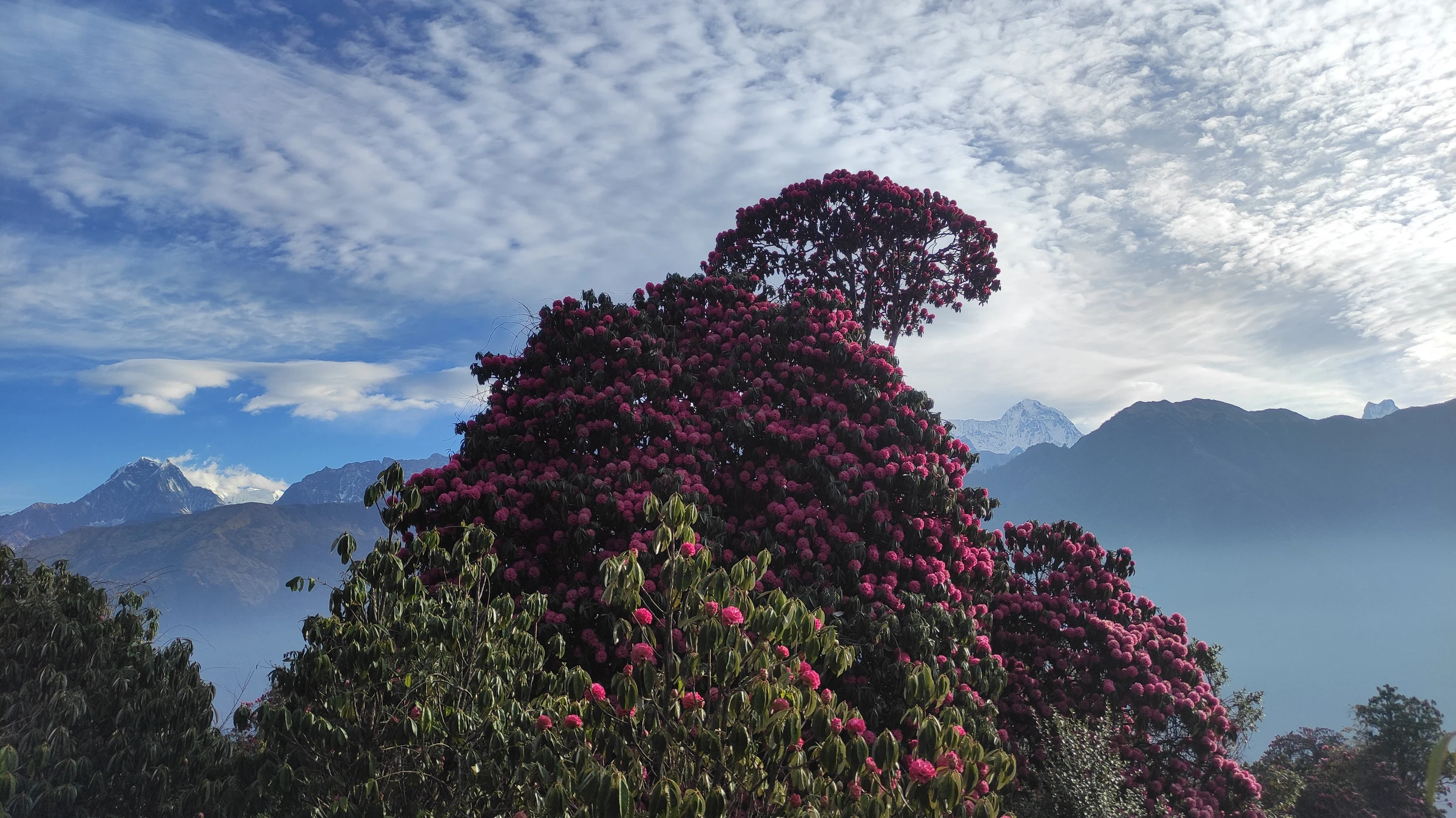
Rhododendron and oak forest on the lower and middle trail.
The climb from Kande to Pitam Deurali.
Overnight stays at Low Camp and High Camp.
Mardi Himal viewpoint, or Base Camp if conditions allow.
Sunrise on the snow peaks.
Walking along the exposed upper ridgeline.
Meals and beds in local teahouses.
A six-day round trip from Pokhara.
Trekking route
Pokhara → Kande → Pitam Deurali → Low Camp → High Camp → Mardi Himal viewpoint/Base Camp → High Camp → Low Camp → Siding → Pokhara.
You drive from Pokhara to Kande and walk up through forested hills and small villages. The trail keeps climbing to Low Camp and then High Camp, where the landscape opens up. An early-morning hike from High Camp leads to the Mardi Himal viewpoint, and on to Base Camp if the weather and your fitness permit. The return is a descent through Low Camp to Siding, then a drive back to Pokhara.
Mountains you can see
The trek looks out on the Annapurna range and several well-known peaks. What you actually see depends on the weather and how far up you get.
Machhapuchhre (Fishtail), 6,993 m: One of Nepal’s most recognizable mountains, with a pointed, double-peaked summit. It dominates the skyline on the upper trail.
Annapurna South, 7,219 m: A big snow-covered peak with rugged ridges, visible from several viewpoints on the route.
Hiunchuli, 6,441 m: Sits next to Annapurna South and fills out the panorama from parts of the trail.
Annapurna I, 8,091 m: The tenth-highest mountain in the world. You may see it behind the nearer peaks, weather permitting.
Mardi Himal, about 5,587 m: The mountain the trek is named for. Its steep slopes and ridges rise behind the upper viewpoint and Base Camp.
Trek facts
Mardi Himal is in Nepal’s Annapurna region, northeast of Pokhara.
You get close views of Machhapuchhre and Annapurna South.
The trail passes through several vegetation zones, from forested hills to high alpine terrain.
In spring, rhododendrons bloom on parts of the lower and middle trail.
High Camp is the starting point for the upper ridge and the route to the viewpoint.
Base Camp is usually given as around 4,500 m, though reported elevations vary.
The upper route can bring strong wind, cold, snow, and fast-changing weather.
No technical climbing is needed, but the altitude and steep sections call for good preparation.
Best season
Spring (March to May) and autumn (September to November) are the best times, with more stable weather and better mountain views.
Spring, March to May. The rhododendron forests bloom, the hillsides are green, and daytime temperatures are pleasant at lower elevations. Clear mornings give good views of Machhapuchhre and the Annapurna range.
Autumn, September to November. One of Nepal’s busiest trekking seasons. The monsoon has cleared the air, so skies are usually clear and the trails are in good shape.